

Why Double-Spending Mattered (And Still Does for Your Trading)
Before Bitcoin solved the double-spending problem in 2009, digital money couldn't exist—you could copy a file infinitely and spend the same coin twice. Understanding how this was solved is the foundation for why decentralized networks work, and why that architecture creates the trading opportunities you see today.
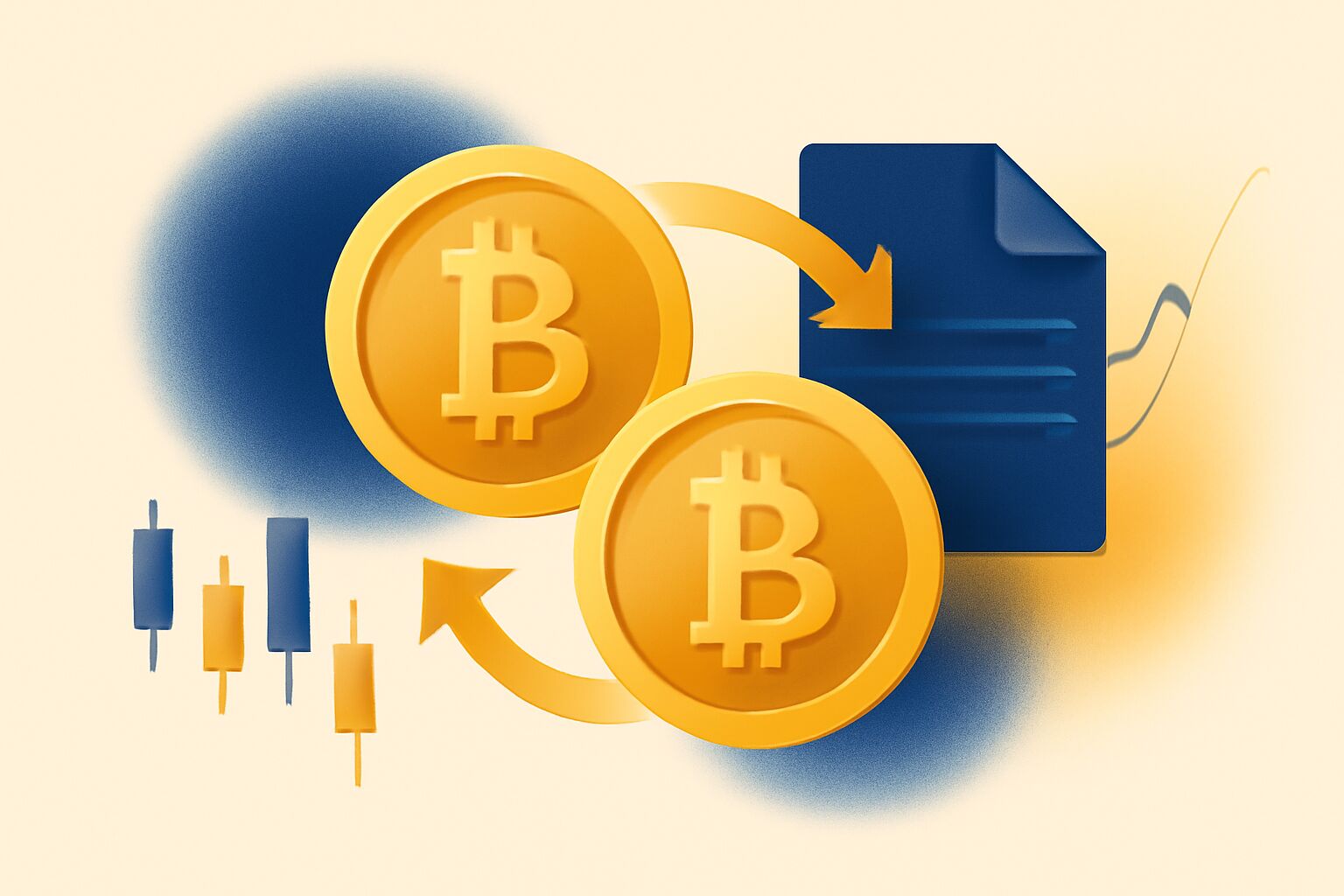
The Problem That Stopped Digital Cash Before Bitcoin
Imagine you own a digital file worth $100. You send a copy to Alice. A second later, you send an identical copy to Bob. Both believe they own the original. Both try to spend it. Who wins?
That's double-spending—the core flaw that made digital currencies impossible before 2009. In the 1990s, researchers Stuart Haber and W. Scott Stornetta sketched a cryptographic solution using chained blocks of timestamped data, but the idea sat dormant. By 2004, Hal Finney attempted to patch it with a system called Reusable Proof of Work (RPoW), which relied on a central trusted server to keep a ledger of who owned what. It worked, but it wasn't decentralized. You still needed to trust the server operator—exactly what cryptocurrency was supposed to eliminate.
How Bitcoin Actually Solved It
Satoshi Nakamoto's insight in the 2009 Bitcoin whitepaper was deceptively simple: instead of one trusted server, use thousands of independent computers (nodes) all agreeing on a single, immutable record of every transaction. Each block contains a cryptographic hash of the previous block, forming an unbreakable chain. To add a new block, miners must solve a computational puzzle (proof-of-work), which makes forging past transactions economically insane—the cost of re-mining all subsequent blocks would exceed any gain.
This distributed consensus mechanism solved double-spending without a central authority. When you send bitcoin to someone, that transaction is broadcast across the network, verified by miners, bundled into a block, and locked in. By the time it receives a few more confirmations (typically 6 blocks, taking ~1 hour), reversing it would require owning 51% of the network's computing power—prohibitively expensive.
For traders: this is why settlement times matter. Bitcoin's 10-minute average block time means your buy order isn't truly final for an hour. Ethereum's shorter block time (~12 seconds) feels faster but uses the same principle. Layer-2 solutions like Lightning or Arbitrum speed this up by batching transactions off-chain and settling periodically.
Smart Contracts Opened the Door to Programmable Money
Bitcoin proved decentralized consensus worked, but it was limited to one job: moving coins. Vitalik Buterin recognized in 2013 that if you could run arbitrary code on the blockchain, you could build entire applications—decentralized exchanges, lending pools, derivatives, auctions—without intermediaries.
Ethereum launched in 2015 with smart contracts: programs that live on-chain and execute when conditions are met. "If price of ETH exceeds $2,000, trigger a liquidation" or "if user deposits 1 USDC, mint 1 synthetic token" are examples. No server, no middleman, just code and consensus.
For traders: this enabled DeFi. Every yield farm, perpetual futures exchange (Dydx, Aave), and flash loan relies on smart contracts executing trustlessly. When you interact with a protocol on TradingView's integrated wallets or research a new token launch, you're betting on code that runs without permission or censorship. This also means bugs can be catastrophic (see: the Ronin bridge hack in 2022, where $625M was stolen because a smart contract had a vulnerability). You're no longer just trading price; you're assessing the security of the systems underlying the asset.
Why This Shift Matters for Crypto Market Structure
Traditional finance relies on institutions (banks, clearinghouses, exchanges) to prevent fraud. Blockchain replaced institutions with math and transparency. Every transaction is visible; every balance is verifiable in real-time on-chain.
This creates asymmetries traders exploit: you can see large transfers (whale movements), contract interactions (smart money activity), and liquidity pools (where trading actually happens) before mainstream markets react. Tools like Etherscan let you watch transactions in real-time; on-chain analysis platforms let you spot accumulation patterns days before price moves.
But it also means you're responsible for custody, private keys, and contract risk. If you lose a private key or interact with a malicious contract, no FDIC insurance recovers your funds. The same immutability that prevents double-spending prevents undo.